Saturday, 27 May 2017

Celebration Of Eid – Ul – Fitr In Jaipur Rajasthan- The Colorful State Rajasthan

Eid-ul-Fitr was celebrated with gaiety and fervor in Rajasthan on Tuesday. Prayers were offered to congregations held in various places. In the capital of Jaipur State, thousands of Muslims gathered to offer prayers in Idgah on the outskirts of the city and Jama Masjid in Johri Bazar Area.

Celebrate Eid – Ul – Fitr In Jaipur Rajasthan

Eid Ul Fitr Namaaz

Eid ul-Fitr marks the end of the month of Ramadan. "Fitr" means breaking and this means breaking the fasting period and all bad habits. It is a spectacle of joy to achieve spiritual prosperity after a month of fasting. The sacred month of Ramadan, which culminates in the Eid-ul-Fitr Festival, unites all Muslims to fasting, feasting, worship and prayer. It is a time for contemplation, spirituality, peace and fraternity.
Eid Ul Fitr Mubarakbad

Muslims celebrate "Eid ul Fitr on the first day of Shawwal - the tenth month of the Islamic calendar, after the month of Ramadan (in which the revelation began and ended 20 + years later, and which is also the month of Fasting). After a lunar calendar, Muslims mark the beginning of the month with the view of the new crescent.

Popular Festival Eid – Ul – Fitr In Jaipur Rajasthan

Sheer Khorma

A special dish called "Sheer Khorma" which is also called "Seviyan kheer" and biryani is prepared and served to guests on the occasion of Eid-ul-Fitr.
Eid Ul Fitr Distributing Sweets

People dressed in new clothes were seen greeting and distributing sweets after performing Namaaz in the morning. In some places, the Hindus also exchanged greetings with the Muslims. Before offering prayers, Muslim families paid Fitra or charity of at least RS 35 on behalf of each member according to Islamic rules so that the poor could also celebrate the Festival.

Places to Visit in Udaipur - It Will Make Your Udaipur Journey Complete

Udaipur also known as the city of lakes is one of the most visited places in the state of Rajasthan. As its name suggests, its sparkling lakes are certainly bewitching. Udaipur is a perfect showcase of heritage, culture and natural beauty. The forts and palaces built by the Mewarswould take you on a journey that is worth an experience. Discover the display of royalty that prevailed in the bygone era, it would be sure to take a breath away. Here we present you the best places to see in Udaipur.

Top 10 Places to Visit in Udaipur

City Palace

1.) City Palace: - The Palace of the city is the most important landmark of Udaipur which represents the kingship of the Mewar. The exquisite architecture of the palace which consists of domes and arches; The high ceiling is definitely worth a visit. The palace complex consists of several buildings and structures that together are known as the Palace of the city. The Palace of the city consists of the Crystal Gallery, the Vintage Car Museum, DAAWAT-i-AAM, DAAWAT-i-Khas, and Maharani Palace. The palace is absolutely wonderful when lit up during the night and people often wait until the wee hours to enjoy the sound and light show which is held every night.
Bagore Ki Haveli

2.) Bagore Ki Haveli: - If you wish to take a look in the lifestyle of the kings and queens, then a visit to the Bagore ki Haveli is an absolute must. It is located on the Ganguar Ghat of the Pichola Lake area and therefore can be covered en route to Lake Pichola. You would be amazed by the sight of wonderful silver jewelry, copper utensils, paintings and sculptures, carved peacocks and elephants which is indeed an evocation of a splendid era. Do not wait till evening to enjoy the dance and music show that displays the culture of Rajasthan.
Ahar

3.) Ahar: - Ahar which was the Royal soil cremation is also one of the must-see places if you are curious to learn about the history and dynasty Mewar. Located just 3 kms from the city, the Ahar are made up of domes and cenotaphs. One of the most attractive cenotaphs consists of the maniquet of the property. If you are looking for peace in the middle of this historic attraction, then do not plan to visit Ahar.
Lake Pichola

4.) Lake Pichola: - Lake Pichola is an artificial lake that stretches 4 kms from the Rameshwar and is also characterized by two islands, namely Jagniwas and Jagmandir. Lake Pichola certainly offers a range of attraction like the Lake Palace which is yet another palace located on the island of Jagniwas. Other than this is the Jag Mandir which is located on the other island of Jagmandir Island. Boating at Lake Pichola is undoubtedly one of the most popular recreational activities.
Jag Mandir

5.) Jag Mandir: - The Jag Mandir is located on the golden decorations, the shades of Fretwork and the carved marbles which is a lake Pichola is a remarkable example of architecture in the 17th century. The Jag Mandir is characterized by excellent ornaments, domes and arches in engraved marble. The huge marble elephants on the standing entrance look great. The north side of the structure consists of the Gul Mahal, Garden Court and Darikhana and on the south side of the structure is the Kunwar pada ka Mahal  the Bara Patharon ka Mahal, the Mahal zenana and the rest of the Part of the Gul Mahal. It is indeed a celebration of the work of art in one place.

Top 10 Tourist Destinations Of Udaipur (Lake City)

Saheliyon Ki Bari

6.) Saheliyon Ki Bari: - Saheliyon Ki Bari also known as the "garden of virgins" was built by maniquet Bhopal Singh. It has a rich history as it was built for maids who took care of the Princess of Udaipur. This palace was built for recreation purposes, for maids and princess where they could celebrate and rejoice. The architecture of the garden is characterized by well-defined fountains, a Lotus pool and marble elephants. The visit to the Saheliyon Ki Bari will certainly fill your heart with joy with its positive vibrations.
Lake Palace

7.) Lake Palace: - As mentioned above, Lake Palace now known as Taj Lake Palace is an exquisite hotel run by the Taj Group which is located in the middle of Lake Pichola on the island of Jagniwas. Lake Palace which is yet another palace located at the island of Jagniwas. The palace is very strategically located with a beautiful Aravalli hills in the background. The architecture of the palace is breathtaking with gilded decorations, shimmering shades and carved marbles that revitalize the Mewar royalty in the bygone era.
Jagdish Temple

8.) Jagdish Temple: - The temple of Jagdish is very popular among the devotees of Lord Vishnu who often frequent the temple of Jagdish to pay homage to Lord Vishnu. Devotees also visit to see the vehicle of Vishnu Garuda which is carved in brass with other sanctuaries such as those dedicated to Lord Ganesh, Lord Surya, Lord Shan and Lord Shiva. Other than faith among the devotees, the architecture of the temple is really worth mentioning. The long fleet of steps with elephants on both sides takes you to the sanctuary. Built in white marble, the temple looks wonderful when lit up during the night. Hundreds of brides of devotees for the swamp that take place every day in the evening.
Lake Fatehsagar

9.) Lake Fatehsagar: - Yet another lake is the Fathehsagar Lake which is located north of Lake Pichola. The lake is connected to Lake Pichola by a canal. Let yourself be tempted by a boat trip to Fathehsagar Lake and stop on the 3 islands. It is an ideal destination to plan a family picnic and take the children to the Nehru Park Zoo which is located on one of the islands.
Moti Magri

10.) Moti Magri: - In order to study and learn about the historical importance and feel proud of the rich history of our country possesses it certainly must take the time to visit the Pratap Memorial Maniquet which is located on a hill not too far from Fatehsagar Lake. The Mane Mahal which was once the residence of the tour maniquet Udai Singh is also an unforgettable experience. In addition to the PRATP Smarak, the Magri also consists of a topographical Japanese rock garden. Its worth to stay back until the evening to adore the light and sound show that depicts the reign of the Mewar dynasty.

Friday, 26 May 2017

Popular Destinations To Visit Leh Ladakh During Summer

Consider traveling to Leh and Ladakh. Then, the best time to visit is from June to mid-September. Yes, it is a small window to visit this area, but the difficult terrain and the harsh weather make it difficult to visit all year round. The area is straight out of a fairy tale. A place of purple mountains where there is something new to see every turn the road takes. The landscape is dotted with white chortens (small stupas built by the inhabitants) of the blue lakes of Azur, deserts flanked by steep mountains. Add to that smiling and friendly premises and you're in for an overwhelming experience. So read that article for all details regarding best places to visit in Leh Ladakh.

      Top 15 Places to Visit in Leh Ladakh During June To Mid September

Zanskar and Ladakh Mountain Ranges

1.) Zanskar and Ladakh Mountain Ranges: - The great mountain ranges of Zanskar and Ladakh will be your companions through most of your trip to Ladakh. They can even be intimidating sometimes. These huge mountains can make anyone feel small. However, the key is to enjoy the beauty that these mountains have to offer. The steep slopes covered with snow reflect the sky. The noisy rivers rush through these mountains making for an absolutely beautiful combination of sight and sounds.
Pangong Tso Lake

2.) Pangong Tso Lake: - Remember the breathtaking lake of 3 idiots where Chatur lost everything? It is the Pangong-TSO Lake which crosses the international frontier border to stretch from India to Bhutan. The lake offers an impressive site for camping and is the current hotspot for all people traveling to Ladakh. The rules do not allow canoeing on Pangong-TSO Lake, but when the lake freezes in the winters, if you feel too brave, you might want to skate at the lake shore.
Tso Moriri Lake

3.) Tso Moriri Lake: - The place is a colorful canvas with blue-white sky, blue-green mountains with high whites, calm blue water of the lake and lush green pastures. Who needs a better place than that? Lake Tso Moriri is probably not as famous as Pangong Lake, but it is still a must place to visit in Leh Ladakh for anyone taking a trip to this area.
Khardungla Pass

4.) Khardungla Pass: - Managed by the Border Roads Organization, Kardung-la Pass is the gateway to the North and can be considered by many as a tourist spot in itself. However, being at such a height, one must take extreme care of health while traveling through the pass. On the fun side, the many Tibetan flags that are said to ward off evil spirits and keep you safe set up a beautiful contrast with white snow.
Nubra Valley

5.) Nubra Valley: - A desert is probably the last thing you would expect while planning a trip to Ladakh, but it is there. The sand dunes of the Nubra Valley offer tourists a very Arabic night like experience. The famous two-hill camels are also found in the area and are often the highlight of the trip for those interested in animals. The origin of the desert is believed to be from the Tethis Sea from the depths of which it is said that the Himalayas has increased.
Magnetic Hill

6.) Magnetic Hill: - The science behind the phenomenon is unknown, but it has been observed that if you leave your vehicle at the base of the hill with the brakes unlocked, it will start to move uphill slowly on its own. It is simply the superpowers you get when you get to this place.
Spituk Gompa

7.) Spituk Gompa: - Ladakh is known as the land of monks and monasteries and rightly so. Spituk is one of the many monasteries in the area. It is famous for its magnificently carved location on top of a hill. With the neighboring mountains being much larger, the location is not exactly a view, but the view of the monastery is still pretty amazing. The winds of the night however can cool you to the bones.
Namgyal Monastery

8.) Namgyal Monastery: - Namgyal Tsemo Gompa or the Patrice Monastery is particularly famous for the Buddha statue that it hosts. It has already been visited by the Dalai Lama himself. Monks and Buddhist enthusiasts flock from all over the country to spend a few days here. Like most Ladakh monasteries, it allows volunteers to stay and help with daily chores at the Gompa while enjoying a few peaceful days here.

                    Top 15 Places to Visit in Leh Ladakh During Summer

Hemis Monastery

9.) Hemis Monastery: - Hemis Gompa is the largest monastery in Ladakh. The annual Hemis festival, which takes place in July, is visited by a large number of people. The masked parade is the culmination of the Festival and is said to be one of the most sacred rituals here. Each year on the 10th day of the Tibetan lunar month called as TSE Chu, the monastery holds this two-day celebration to commemorate the birthday of Guru Padmasambhava which is often said to be a reincarnation of Buddha.
Lamayuru Monastery

10.) Lamayuru Monastery: - Ever wondered why the sky is so beautiful when seen in movies but not your home? This place shows you how to be in the fold of nature and away from all the hustle and bustle of the city can allow you to have one of the best Star-gazing nights in your life. If you want to get the most out of the Lamayuru Monastery, plan your trip to Ladakh in sync with the time of the shooting stars in the area.
Likir Monastery

11.) Likir Monastery: - The beautiful wood work is probably the best non-Buddhist thing about this Monastery. The museum that caters to the history of the Ladakh region comes a close second. The picturesque surroundings come third and the list is unending.
Suru Valley

12.) Suru Valley: - Ladakh is an ideal area for all mountain adventure sports. The trek across the SURU valley to the Drang Drung Glacier is one of the best in this aspect offering a mix of all possible things that one can do on the mountains. The trek is amongst one of the most challenging in the area and is only picked up by experienced hikers.
Shanti Stupa

13.) Shanti Stupa: - One of the many reasons why people take a trip to Leh-Ladakh is to find a little time to take a break from the daily schedule and re-evaluate their lives. Shanti Stupa offers the ideal location for the same. The night view is even better and a little bit of meditation in addition to the stupa could help you get what you came here for.
Leh Palace

14.) Leh Palace: - The ancient palace of Leh could have lost its grandeur, but the ruins of wood and stone are still a must visit for all those interested in the historical architecture of the region. The palace was built by King Namgyal in the 17th century and is 9 storeys high. The building is under the control of the India Archaeological Survey (ASI) and offers a panoramic view of the Attis Kangri and Zanskar ranges across the Indus Valley.
Zanskar River

15.) Zanskar River: - The chadr trek as it is popularly known as is essentially trekking on the frozen rivers. The Trek on the Zanskar River is the most popular and is often undertaken in large groups by adventure enthusiasts. The chadr trek is usually taken in November when the river is frozen and safe for trek on while the rest of the environment is still friendly enough to let you survive.

Kerala God’s own country

Kerala God’s own country

Kerala God’s own country - Kerala, we love it. First, Keralais are welcoming and warm. Then, in the "Land of Coconuts", nature is generous and varied.

kerla tour

The backwaters, a vast network of rivers, lagoons and canals, criss-cross the region to the delight of The beaches of South Kerala are seaside, and the mountains, carved by places of tea plantations, very beautiful, represent the somewhat more wild part of the area. Finally, this state, formed from the meeting of those of Travancore and Cochin in 1956, remains very peculiar from a historical, political and demographic point of view.
Tolerance is a long story. Animists, Dravidian, Indo-Aryans, Jains, Buddhists, Hindus (of course), Jews, Christians fleeing the persecution of Persia and Babylon, Jacobites, Anglicans succeeded. All in good order, each rite dyes itself with a local hue. In a more agitated period, Vasco de Gama attempted to break the Arab monopoly on the spice trade before die in Cochin.
Closer to us, from 1957 to 1991, the Marxists administered the region. Today, Kerala is again led by an alliance led by the local Communist Party, still very popular. The Keralais state has the highest human development index in the country. Poverty is less visible and the economy energized by the contribution of Keralais parties to work abroad, especially in the Gulf countries.
Paradoxically, if the population density of the state is one of the highest ,  the fertility rate does not exceed 1.8 children per woman, a rarity in the country. Moreover, this state, heir to a matrilineal social organization, is the only Indian state  where it is born more women than men.

The literacy rate especially for women, is the highest in the country: 94% of Keralais (92.1% for women). Finally, Kerala has an original culture which is expressed in particular through the Kalarippayat and the Kathakali, respectively martial art and dance Theatre.

Best Tour Package for Honeymoon Couple >> Tour Package to Kerala south India 9 days plan kerala

Tour Package to Kerala south India 9 days plan kerala

Tour Package to Kerala south India


Tour Package to Kerala south India
Discovery Tour of Kerala God’s Own Country in 9 days:
Start From Cochin To Periyar Then Kumarakom Enjoy Cruise backwaters and Mararikulam.
Beautiful Landscape of Kerala - Travel day by day one city to another city.

Day 1:  Cochin (Kochi)
Day 2: Kerala-Cochin (Kochi)-Kumarakom
Arrival at the Kerala in Cochin and airport reception. Transfer to the region of the backwaters, consisting of lagoons and lakes fed by a quarantine of rivers and coastal rivers descending from Western Ghats. Arrived at Kumarakom and lunch. To relax after your flight and jet lag, afternoon of idleness with possibility (optional) Ayurvedic massage or even stroll in the nearby village and initiation to the kitchen of the Kerala.
Dinner and night in a hotel.
Region of backwaters and Kumarakom
The Backwathers Kathakali Show of Kathakali in the Kerala

munnar kerala tour

Day 3: Kumarakom-Periyar
Through beautiful landscapes of tea hills and spices, route to the region of the National Park of Periyar in private vehicle with your driver.
Lunch and free afternoon. Dinner and night in a hotel.
The Karakorum
Day 4: Periyar-Periyar National Park
In the morning, an elephant ride in the spice plantations. Lunch then departure to the National Park of Periyar (still called Thekkady), famous for its 320 species of birds and its beautiful landscapes, eucalyptus, palms and orchids. Small boat ride on the river Pamba from where you may have the chance to see elephants coming to water ...
Dinner and overnight in a hotel in Periyar.
Elephants in the national park of Periyar

Day 5: Cruise in the backwaters of the Kerala
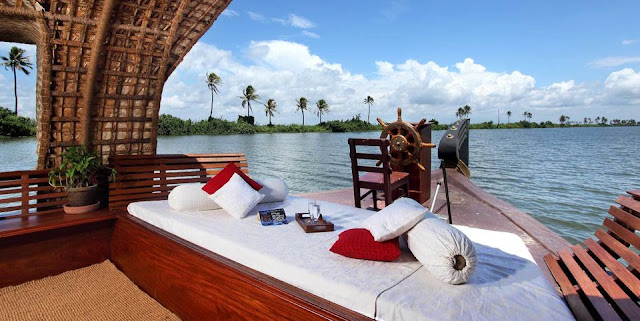
Back to the backwaters and embarking on an old rice barge arranged in a small floating hotel ... Comfortable, these "house-boats" are the ideal means of locomotion to discover the backwaters, its inhabitants and the way of life in this lake environment through the canals and rice fields punctuated by colorful churches ...
Sailing to the sunset. Meals and nights aboard the house-boat.
Navigating the Backwathers of the Kerala
Market in the backwhaters of the Kerala encounters in the Kerala boats in the backwhaters of the Kerala

Day 6 and 7: Allepey-Mararikulam
In the morning of day 6, landing at Allepey and transfer to the seaside in Mararikulam, coastal village. Possibility of visiting a temple dedicated to Shiva where regularly important ceremonies take place. Lunch and free time, the time you can use for some relaxing activities ... Ayurvèdique Centre, Swimming pool, yoga classes, Kerala cooking classes, meetings with fishermen, bike rides ... or simply ... lazy!
Beach in Mararikulam
Day 8: Mararikulam-Cochin
In the morning, transfer to Cochin. Accompanied by your guide (francophone), you will discover "Fort Cochin" ... Portuguese churches, Spice market, Synagogue District ... In the late afternoon, a small cruise in the famous Bay of Cochin.
Dinner and night in a hotel.
Travel to Mararikulma, India
Sunset in Mararikulam
Day 9: Departure


Popular Festivals And Fairs of Rajasthan

Rajasthan will host several festivals in the coming months, ranging from festivals of dance music and camel shows, to a ball of events and a gala of literature. The most colorful state of India has, in recent years, also gained the reputation of being one of the most favorable regions for festivals in India. Besides the fact that it makes for a scenic Festival venue, the organizers' preference for this particular region has to do with the welcoming government, which made laws easier for such events to thrive. Not to mention the cultural ethos of the Rajasthani people, which are known to be an extremely hospitable. Here are 11 festivals that the state will host in the coming months.

11 Festivals And Fairs of Rajasthan

Camel Fair Bikaner

1.) Camel Fair – Bikaner: - The Camel Fair in Rajasthan is popular in Bikaner and is held in January. The "desert ship", the camel, is adorned with colorful stools, anklet bracelets and necklaces. A procession is made by displaying the camels, while the owners of camels hold the head in honor. Contests and shows are part of the festivities. Crowds cheer like war shooting contests, camel races and camel dance competitions are held.
Desert Festival, Jaisalmer

2.) Desert Festival, Jaisalmer: - Each year during the Desert Festival in Rajasthan, the barren land around Jaisalmer comes alive with the beats of traditional musical instruments, songs, colors and remarkable enthusiasm. The Rajasthan Festival displays the best of folk traditional Rajasthani culture that will leave you hypnotized. This usual fair in Rajasthan attractions include breathtaking performances by skilled jugglers and snake charmers. But the main attractions of the fair remain camel acrobatics, camel races and scenery, camel polo, war shooting and innumerable other events of this kind.
Mewar Festival

3.) Mewar Festival:- Dedicate to the goddess Gauri (Parvati), Mewar Festival in Rajasthan offers the best of rajasthani culture. This festival in Rajasthan is celebrated to host the spring season with various rituals and fireworks. The great Climax is seen when the group of women dressed in rainbow tones of scarlet, yellow, green and violet red carry images to the Gangaur of Lake Pichola and an official boat procession begins from the Lake Palace.
Elephant Festival, Jaipur

4.) Elephant Festival, Jaipur: - Held every year around the Holi Color Festival, Elephant Festival in Rajasthan unveils the majesty and grandeur of elephant. The main attractions of the Festival include a royal procession of 60 elephants in their best refinery, a game of Polo Elephant, an elephant race and playing Holi on mammals. It will certainly be a time to cherish for a long time to come.
Teej Festival, Rajasthan

5.) Teej Festival, Rajasthan: - Held in Jaipur, the Rajasthan Teej Festival commemorated the Union of the Goddess Parvati with Lord Shiva. As the desert burns with the hot summer sun, everyone is waiting impatiently for the advent of the monsoons. Teej marks the arrival of the long expected rains and is the Festival of swings. The swings are decorated with flowers and young girls sing joyful songs. The Teej idol is adorned and adored.

Main Fairs And Festivals of Rajasthan

Pushkar Fair, Pushkar

6.) Pushkar Fair, Pushkar: - Pushkar Fair is an event in Rajasthan which is worlds famous fair of Rajasthan and attract tourists from around the world. The Pushkar Fair is held every year during the month of Koba feast and countless devotees of all denominations gather to dive into the Holy Lake. Dance, music, cheerfully dressed people and various cultural events enhance the pleasure of the occasion. Main attractions of the Camel Shopping Fair, cattle auctions and colorful shops displaying beautiful handwork.
Kite Festival, Jaipur

7.) Kite Festival, Jaipur: - A color festival with a different naunce-like kites take to heaven everywhere Rajasthan.in the evening, the kites with lights in them add to the scintillating sky URabove. The main celebration points are Jaipur and Jodhpur. The main kite flying day, Makar Sankranti, is on 14 January.
Tilwara Fair, Tilawara

8.) Tilwara Fair, Tilawara: - A 175-year-old fair dedicated to malinathji, one of the rulers of the village of jasol, it is held in a dry riverbed and came to signify the horse trade Marwari, Kathi and Sindi. Some mystical aspects that relate to the Fair include the raising of about two feet of water for only the fair period, and testing animals at poles in the soil that is otherwise too soft for him.
Dussehra, Kota

9.) Dussehra, Kota: - Dussehra commemorates the massacre of the 10-head Ravana by Rama, hero of the Indian epic, Ramayana. An effigy of Ravana is lit, stuffed with firecrackers, creating an exciting explosion. Dussehra also marks the beginning of the festive season with Diwali, the Festival of Lights, just 20 days away.
Gangaur Fair, Jaipur

10.) Gangaur Fair, Jaipur: - The celebration of the monsoon, harvest and martial loyalty in Jaipur. The idols of Issar and Gangaur, manifestations of Shiva and Parvati, are worshiped by women, especially bachelors who pray for a Shiva-like companion. The Festival is particularly colorful in Jaipur, Udaipur and Mandawa in the Shekhawati region.
Nagaur Fair and Desert Festival

11.) Nagaur Fair and desert Festival: - Participate in two unusual celebrations, a cattle show in Nagaur and a tourist fair in Jaisalmer. A trade fair for cattle and camels in January-February, it is a wonderful oppurnity to catch up with rural life as owners from all over the state come to camp on the dead ends of Nagaur while they buy and Sell animals. The animal skins, cut in beautiful patterns, are particularly interesting.

Tour to Dev Diwali in Varanasi India

Tour to Dev Diwali in Varanasi India

Dev Deepavali festival Varanasi India

Varanasi is a city in the Indian state of UP ( Uttar Pradesh) dating to the 11th century B.C. Popular  as the spiritual capital of India, the city draws Hindu pilgrims who bathe in the Ganges River’s sacred waters and perform funeral rites. Along the city's winding streets are some 2,000 temples, including Kashi Vishwanath, the “Golden Temple,” dedicated to the Hindu god Shiva.
The Dev Deepavali is the festival of Kartik months at the day of Poornima special celebration in Varanasi, India.
Varanasi  is best places for spiritual seekers. Dev Deepawali means God’s Festival of Light.
Varanasi, lovingly dubbed the city of Shiva, Varanasi  linked you to Hindu rituals, delving into this teeming and tortuous; It is acknowledging not understanding everything but getting to let go of it to simply welcome what the men and the gods have to offer us.
In the heart of a landmark of artists and musicians, secret of a well guarded place where the emulation of the group brings me into endless dreamlike daydreams. On the terrace, the sounds of tablas, zithers and other Jew mingle with the psychedelic drawings of frescoes covering the walls. Observe the Ganges, both theatre and witness to the mighty fervor of the Hindus. On the opposite shore, the nudity of the land gives relief to the inextricable lassis of the historic city and reinforces the diffuse feeling of a population every day more numerous.


Varanasi - At dawn, under a light still soft and caressing, the ghats-these steps descending to the Ganges-, give body on kilometers to the cycle of life: here, a wet sari reveals the lewd forms of a woman taking her ritual bath while, with her hands clasped towards the star, she addresses her prayers; There, men in white Longhi beat the linen on the flat stones; Again, children play kites while their elders are playing cricket. 
Hindus who came to die in Varanasi to reach the Moshka. Impressive stocks of wood up on the cremation ghat, waiting to be weighed to create a pyre. The amount of wood used depends on the income of the family, the sandalwood remaining the most expensive. Now and for a lower cost, an electric oven is also available. It is not unusual to cross a funeral procession at the turn of an alley, the draped stretcher of warmly colored linens before being plunged into the purifying waters of the Ganges and deposited on the pyre. Thus, they are thousands each year to undertake the journey so far, to live or to die, but especially to pray.

This city remains a hymn to life, in the noisy morning rumor as in the coolness of Twilight. Its narrow and crowded lanes, keeping between their stones a relative freshness, smell good spices and milk and invite to the wandering without purpose.  Sometimes too narrow to let a man pass when a huge bull nonchalantly ruminates in the middle, careless of the chaos he feeds.
  
Taking advantage of a spare street space, we take the time to taste my buttermilk,. When the Sun takes its bow, darting its last rosy rays over the tumultuous waters of the river, hundreds of small lights dance on the water. Cradle of the wishes and wishes of the pilgrims, the baskets of leaves, flowers and flame, carry with them their secrets ... The songs of the Pujas resonate and the scent of the incense mingle with the heady scent of jasmine, to compete to give at the moment an overwhelming solemnity. 

Fascinated by the Hindu religion, this sacred city carries every day a little more in a world populated by gods and legends, where each of the daily gestures are carried by a cosmic breath of indescribable power. At the ends of life and death, Varanasi and his secular rituals make me live some of the most beautiful moments of my journey ... A city with magnetic appeal and charms captivating.
happy-dev-diwali-varanasi

 Happy Dev Diwali Varanasi